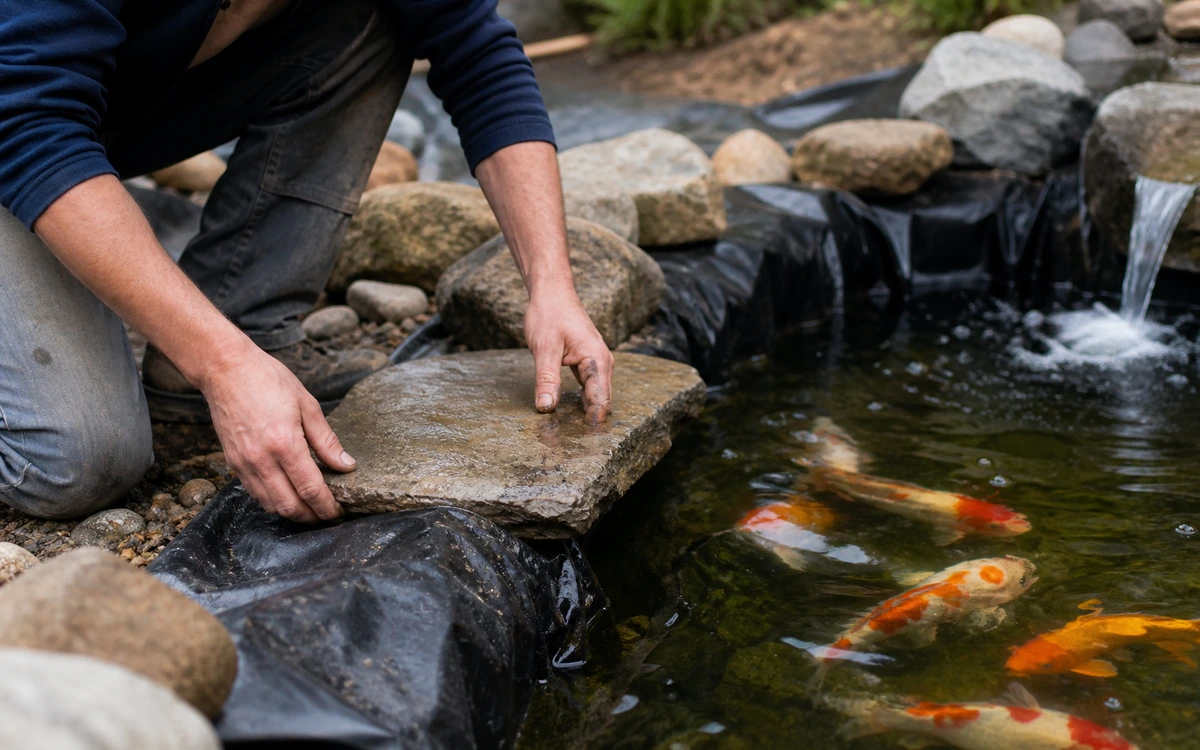
We provide professional koi pond installation services in Denver, CO for unfinished backyards, poorly designed water features, leaking liners, and unstable ground conditions that prevent reliable pond construction. Excavation, liner placement, filtration setup, and rockwork installation create a properly sealed aquatic system that supports long-term water retention, circulation, and structural stability. Call us today to get started.
Why Does a Newly Installed Koi Pond Start Losing Water or Developing Leaks?
A koi pond usually loses water after installation due to liner misalignment, poor edge sealing, or ground settling around the structure. Small shifts in soil pressure can pull joints apart or expose weak points in the liner. This often shows up in the first few weeks after filling the pond.
How Does High Altitude Climate Affect Koi Pond Installation in Denver?
Denver’s thin air, strong sun, and dry conditions can increase evaporation and temperature fluctuation in outdoor ponds. Neighborhoods near Washington Park and foothill communities close to the Rockies often deal with rapid weather changes. Koi pond installation typically includes UV protection strategies and water-efficient circulation systems.
How Long Does It Take for a Koi Pond Ecosystem to Stabilize After Installation?
A koi pond typically takes several weeks to a few months to fully stabilize biologically after installation. Beneficial bacteria need time to establish in the filtration system and balance ammonia levels. During this period, water clarity and fish behavior can fluctuate noticeably.
What Is the Difference Between a Koi Pond Liner Installation and a Concrete Koi Pond Build?
A koi pond liner installation uses flexible materials like EPDM rubber to create a sealed basin, while concrete ponds are rigid, permanent structures. Liners are faster to install and easier to repair, but concrete offers more long-term structural control. Each method affects maintenance needs and design flexibility differently.
Why Does a Koi Pond Turn Green or Cloudy After Being Installed?
A koi pond turns green or cloudy after installation due to algae blooms and unsettled biological filtration. Excess nutrients combined with direct sunlight trigger rapid algae growth before the ecosystem balances. This is especially common in the first stages of cycling the pond.
Can Koi Fish Survive Immediately After a New Pond Installation?
Koi fish should not be fully introduced immediately after a pond installation because the water chemistry is not yet stable. Ammonia and nitrite spikes are common until the filtration system matures. Adding fish too early increases stress and can lead to health issues.
What Causes Filtration or Pump Failure in a Newly Installed Koi Pond?
Koi pond filtration or pump failure after installation is usually caused by improper sizing, clogged intake lines, or debris from construction materials. Airlocks and incorrect plumbing connections can also restrict water flow and strain the system. These issues often appear during the first full circulation cycle.
How Much Does Koi Pond Installation Cost in Denver, CO?
Koi Pond Installation costs in Denver, CO typically range between $11,340 and $42,525, with estimated pricing depending on pond size, excavation depth, filtration and pump system capacity, liner or concrete construction type, and landscaping complexity. Pricing can also vary based on site access, soil conditions, electrical runs for pumps and lighting, water feature add-ons, and the level of custom rockwork and finishing details required.